

The Breakdown
Kotaku's report on Rockstar's development philosophy pulls back the curtain on something longtime fans have suspected for years: GTA titles are not built the way most open-world games are built. Instead of locking a narrative first and designing the world around it, Rockstar's internal teams prioritize systems. That means core gameplay loops like vehicle handling, weapon feel, NPC reactivity, and physics interactions get built and refined first, often years before a single story mission is scripted.
This matches what we've already seen trickle out through GTA 6's open world systems reveal, where Rockstar North detailed layered AI behavior, dynamic weather, and ecosystem simulation as foundational pillars rather than late-stage additions. The studio's philosophy, according to the report, treats the city itself as a character. Every mechanical system, from how Jason sprints to how NPCs flee gunfire, gets tested in isolation across thousands of internal builds before it's ever stitched into a mission.
The Kotaku piece also touches on Rockstar's famously secretive internal pipeline, where different teams across multiple studios (Rockstar North, Rockstar San Diego, Rockstar India, and others) work on discrete systems that eventually converge into one cohesive build. This decentralized-yet-unified structure is why previous GTA titles took years longer than competitors to ship, but also why RAGE engine titles tend to age better mechanically than scripted-heavy alternatives.
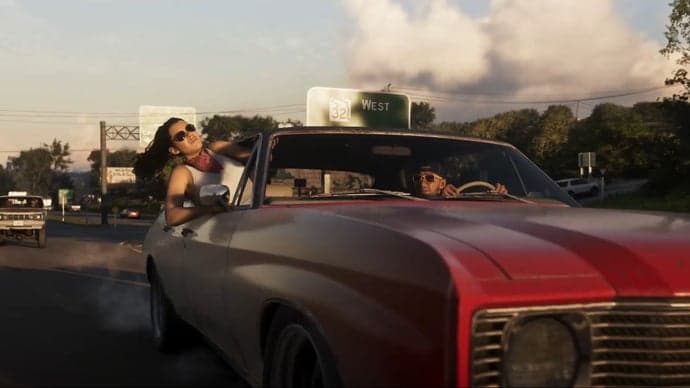
Crucially, the report reinforces that narrative writing at Rockstar happens in tandem with systems design, not after it. Dan Houser's old interviews about "the story serving the world, not the other way around" get validated here. Jason and Lucia's character arcs, which we've tracked through their visual evolution since 2023 and recent screenshot reveals, were reportedly adjusted multiple times based on how mechanical testing shaped their in-game capabilities and animations.
Tactical Analysis
Here's why this matters more than it looks on the surface. A systems-first development pipeline means GTA 6 isn't going to be a game with a handful of flashy scripted sequences surrounded by filler. It means the entire map, systems, and mechanics are designed to be replayable and emergent from day one. If Rockstar is building AI behavior and physics interactions as the foundation, that directly explains why we're seeing things like hurricanes and legendary animal hunts integrated as core gameplay loops rather than cosmetic weather effects. These aren't scripted cutscene moments. They're systemic events that emerge from the simulation itself, meaning player positioning, vehicle choice, and timing will all matter tactically when a storm rolls in over Vice City.
This also reframes how we should think about the Hurricane Heist gameplay loop. If weather and disaster systems are baked into the engine at a foundational level, players should expect hurricanes to interact with heist mechanics dynamically: changed police response times, altered NPC traffic patterns, and modified vehicle handling on flooded streets. This isn't a tech demo gimmick, it's core RAGE 9 architecture.
For players grinding toward launch, the biggest tactical takeaway is this: expect emergent difficulty curves rather than purely scripted ones. Rockstar's systems-first approach historically means missions can be approached multiple ways, NPC reactions vary based on player reputation, and economy systems (especially relevant given the studio's confirmed stance on cash-gated story missions) will likely scale dynamically based on how players engage with Leonida's underworld.
There's also a map-design implication worth flagging. Since systems get built before content gets placed, Rockstar's decision to skip Disney World and the Space Coast almost certainly wasn't a licensing dodge, it was a systems-scope decision. Building weather simulation, wildlife AI, and water physics across a theme-park-dense region would have diluted focus from denser, more tactically relevant zones like Vice City's urban core and the swamps. This aligns with Rockstar's own comments that the map is too big for story mode alone but that scale won't come at the cost of detail.
Players should prepare for a launch-day experience where exploration itself is a mechanical system, not a visual backdrop. Expect vehicle physics, wildlife behavior (see our animal tier list breakdown), and weather to all be interconnected variables that affect mission outcomes. This is not a theme park GTA. It's a simulation-driven sandbox where tactical awareness of environmental systems will separate players who dominate the economy from those who get caught flat-footed mid-heist.
Bottom line: Rockstar's development reveal confirms GTA 6 is being engineered as a living system first, a story second. That's good news for replayability and terrible news for anyone expecting a short, linear campaign.