

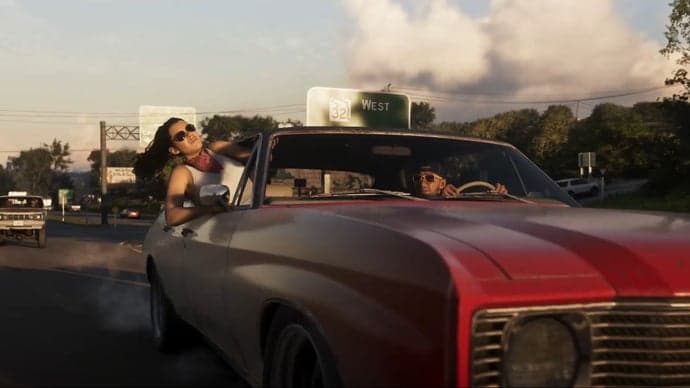
The Breakdown
Rockstar North's latest technical disclosures move past marketing buzzwords and into the actual architecture holding Leonida together. Six systems stand out as the backbone of the GTA 6 open world, and each one has been independently corroborated across recent reveals, screenshots, and developer commentary.
1. Dynamic Hurricane and Weather System. Leonida now runs on a seasonal weather engine capable of spawning full hurricane events that alter flooding, traffic patterns, NPC behavior, and mission availability in real time. This isn't a scripted cutscene storm. It's a persistent simulation layer, as confirmed in our breakdown of GTA 6 Hurricanes & Legendary Hunts Confirmed in Leonida.
2. Living NPC Ecosystem. NPCs operate on individual schedules, react contextually to player reputation, and remember prior encounters within a session. This is a direct evolution of the systems teased in the Game Informer Reveal, where Rockstar confirmed deeper AI routines than anything in GTA 5 or Red Dead Redemption 2.
3. Full Wildlife Simulation. Alligators, birds, dogs, and dozens of other species now follow actual predator/prey logic across the Everglades and coastal zones. We've tracked every confirmed creature in the GTA 6 Wildlife Guide and ranked their tactical relevance in GTA 6 Animals Ranked.
4. Cash-Gated Mission Progression. Certain story and side missions now require a minimum cash threshold before they unlock, tying narrative pacing directly to the player's economic grind. Full mechanical analysis is in GTA 6 Cash-Gated Missions: What It Means for Your Grind.
5. Hyper-Density Population Scaling. Rockstar North confirmed the open world dynamically scales NPC and vehicle density based on district type, time of day, and server load, a system first spotted in the 13 New Screenshots and expanded in 12 New GTA 6 Screenshots.
6. RAGE 9 Environmental Destruction. Building damage, foliage interaction, and terrain deformation now persist locally across a play session, a leap Rockstar addressed directly when discussing how GTA 6's Scale Won't Kill Detail.
Rockstar North has been explicit that these six systems are not isolated features bolted onto Leonida. They're interdependent. Weather affects NPC density. NPC density affects mission availability. Mission availability affects your cash flow. It's a closed loop, and understanding that loop is how you dominate this map instead of getting steamrolled by it.
Tactical Analysis
Here's what nobody's saying clearly enough: these six systems are a direct response to the criticism that open worlds have become decorative wallpaper. Rockstar North is betting the entire GTA 6 experience on the idea that systems talking to each other beats systems existing in isolation. That's a massive technical gamble on RAGE 9, and if it holds up under the weight of a map this size, which Rockstar itself admitted is too big for story mode alone, it changes how you should approach every single session.
Start with the hurricane system. If storms genuinely gate traffic, flood low-lying districts, and spike NPC panic behavior, that means your heist routing needs a weather check before execution, not after. Pulling a job during a Category 3 event in Leonida could mean fewer cops patrolling flooded streets, but it also means fewer civilian witnesses to rob, fewer open businesses to hit, and potential vehicle stalling in deep water. The Hurricane Heist gameplay loop we've already covered suggests Rockstar wants players treating storms as a tactical window, not an inconvenience. Learn the cycle, exploit the chaos.
The cash-gated mission system is the one players are sleeping on hardest. If story content requires liquid cash thresholds, side hustles stop being optional flavor and become mandatory grind infrastructure. That means early-game players need an efficient income loop locked in before they hit narrative walls. Expect convenience store robberies, street-level drug routes, and repo jobs to become the de facto XP farm of the early campaign, not because they're fun, but because they're gatekeepers.
The living NPC ecosystem and hyper-density population scaling work together to create something GTA has never actually had: consequence memory. If an NPC in a specific district remembers you shot up their block last week, that's not just flavor text, that's a live threat modifier. High-heat players might find certain neighborhoods functionally locked off without a cooldown period or a disguise system workaround. This pairs directly with the density scaling system, since fewer NPCs in a hostile zone means fewer witnesses, but also fewer soft targets for cash generation.
Wildlife simulation sounds like the softest system on this list, but don't sleep on it. Alligators and aggressive fauna in the Everglades aren't ambient noise, they're environmental hazards that can disrupt a getaway route if you're not paying attention to terrain type. Players grinding collectibles or side content in swamp zones need to treat animal spawns as a legitimate threat tier, not scenery.
Finally, the RAGE 9 destruction system is the quiet game-changer for PVP-adjacent content in GTA Online's eventual Leonida expansion. Persistent local damage means cover tactics in multiplayer shootouts will evolve mid-fight. A wall that blocked a sniper angle five minutes ago might not exist anymore. That's a genuinely new layer of positional awareness nobody's optimized for yet because nobody's played it.
The throughline across all six systems: Rockstar North built Leonida to punish players who treat it like a static sandbox. Players who study the systems and their overlaps are going to have a measurable advantage on day one.