

The Breakdown
Rockstar's creative team laid out the thinking behind GTA 6's satirical approach in a new round of comments, directly addressing why the game won't be lampooning specific headlines, politicians, or viral news moments the way some assumed it might. The quote driving this conversation is blunt: "It has to be more over the top, more insane, more in your face." That's not a throwaway line. It's a mission statement for how Rockstar North is building the tone of Vice City and the broader Leonida map.
This tracks with everything we've already pieced together about GTA 6's writing philosophy. Rockstar previously confirmed the game avoids real politics in favor of broad social satire, a strategy that's been core to the GTA formula since Vice City's original 1980s cocaine-cowboy fever dream. The difference now is Rockstar is explicitly stating the reasoning out loud, likely to get ahead of day-one discourse that tries to map every radio ad or billboard onto a 2025-2026 news story.
The context matters here. GTA 5 launched in 2013 and its satire (Lifeinvader as a Facebook stand-in, Republican Space Rangers, the Epsilon Program) aged into legend precisely because it wasn't tethered to a specific week's headlines. Weazel News jokes about a fictional tech bro or a cult leader hit just as hard a decade later. Rockstar is clearly applying that lesson at scale for GTA 6, doubling down on exaggeration over topicality.
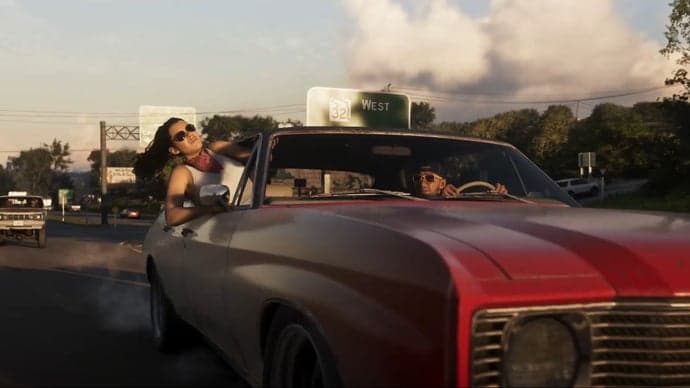
This philosophy lines up with details we've tracked across every confirmed detail ahead of launch, where character writing for Jason and Lucia leans into heightened, almost telenovela-style criminal drama rather than ripped-from-the-headlines realism. It also explains why leaks around PEGI ratings and ESRB classifications point to extreme, cartoonish violence and vice rather than grounded, newsroom-style commentary. The tone is maximalist by design.
Tactical Analysis
Here's why this matters for how you'll actually play GTA 6, not just how critics will review it.
First, expect Leonida's satire layer (radio stations, in-game internet, billboards, NPC chatter) to function as a parallel universe exaggeration of 2020s culture rather than a direct mirror. Think crypto scams turned into literal cult economics, influencer culture turned into a weaponized social credit system, or wellness grifters running actual criminal fronts. This is a deliberate hedge against the content aging badly, but it also means the writing has more room to be absurd without breaking immersion. For players optimizing for max entertainment value during long sessions, this is good news: the humor won't feel stale by month three of post-launch content.
Second, this ties directly into the RAGE 9 engine's ambition for a reactive, living world. Rockstar has already said the map is too big for story mode alone to fully explore, meaning side content and environmental satire (billboards, TV channels, random encounters) will carry a massive chunk of the game's comedic and thematic weight. If that satire were tied to specific real news events, half of it would feel dated or confusing within a year. By going "over the top" instead, Rockstar is future-proofing the side content that players will be engaging with for years, much like GTA Online still runs jokes from 2013 that land because they were never about a specific headline.
Third, don't sleep on how this affects mission design. Heist and setpiece missions, like the kind teased in the Hurricane Heist breakdown, likely lean into exaggerated scenarios (natural disasters, cult compounds, cartel insanity) rather than torn-from-CNN plotlines. That's a tactical signal: expect your mission objectives to escalate into genuinely unhinged territory rather than grounded crime-drama realism. Players who go in expecting a "true crime" tone will be caught off guard by how cartoonish certain story beats get, especially anything touching the in-game internet or cult-adjacent factions.
Fourth, this decision also protects Rockstar from the kind of review-bombing and discourse spirals that plague games perceived as "too political." By avoiding specific real-world events, the satire remains broad enough that players across the political spectrum read it as commentary on human behavior and greed rather than a hot take on a specific administration or news cycle. Smart move from a business standpoint, especially with a $100 price tag already under scrutiny and no room for unnecessary backlash.
Bottom line: treat Leonida's satire as a heightened, cartoonish lens on culture broadly, not a scorecard of 2025 news events. Your best strategy is to engage with the world's humor as absurdist commentary, similar to how Vice City's 1980s version worked, rather than trying to decode which real politician or influencer a character is "based on." That search for 1:1 real-world parallels will waste your time and miss what Rockstar is actually building.