

The Breakdown
GameSpot's reporting pulls from recent Rockstar statements addressing a question that's hung over this project since the first trailer dropped: when you build a map this big, something usually gives. Open-world studios have historically faced a brutal tradeoff. Go wide, and your world turns into procedurally stamped filler. Go deep, and your map shrinks to keep every square foot handcrafted.
Rockstar's answer, according to the studio, is that GTA 6 refuses to pick a lane. The Leonida map, confirmed to dwarf Red Dead Redemption 2 combined with GTA 5, is reportedly getting the same per-block attention to detail that made Los Santos feel alive in GTA 5, just applied across a territory roughly four times larger.
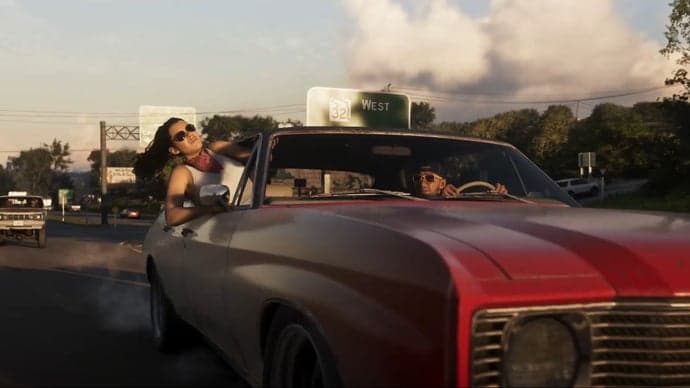
This isn't just marketing talk. We've already seen evidence of it stacking up. The 13 new screenshots Rockstar dropped showed layered environmental storytelling in background assets, not just hero locations. The confirmed wildlife roster adds ecosystem behavior to rural zones that previously would've just been empty grass textures. And the hurricane and Legendary Animal hunting systems suggest dynamic systems layered on top of static geography, which is a much harder engineering problem than just making a bigger map.
Rockstar did confirm something important in the same window: the map is too big to fully explore in a single story playthrough, which tells you the studio is leaning into density over curated brevity. They're not trying to make a map you can 100% in 40 hours. They're building something meant to be lived in across hundreds of hours, similar to how RDR2 players are still finding new content years later.
Tactical Analysis
Here's the part most coverage is missing: this statement is really about engine architecture, not artistic ambition. RAGE 9 (Rockstar's updated internal engine stack, built on the Advanced Technology Group's work since RDR2) is what makes "scale without compromise" technically plausible instead of just a promise that quietly dies in a day-one patch.
The key tactical implication is streaming technology. Previous open-world games that promised "no compromise" scale almost always hit a wall with asset streaming, LOD (level of detail) pop-in, or NPC density throttling the moment you leave a city center. If Rockstar is confident enough to make this claim publicly, ahead of a November 19 launch, it strongly suggests their streaming solution has matured past the RDR2 era, where rural zones noticeably thinned out compared to Saint Denis.
For players, this has real gameplay consequences you should start planning around now:
Travel time becomes a real resource. A map this dense, where even backroads and swampland carry handcrafted detail, means fast travel isn't just a convenience, it's going to be a core economy decision. Expect the fast travel systems already confirmed to matter more here than in any previous GTA, because manual driving across a fully-detailed Leonida will eat real playtime.
Heist and mission design gets geographically ambitious. If rural, swamp, and small-town zones get city-tier detail, expect heist setups and cash-gated story missions to stretch across biomes instead of staying centralized in Vice City proper. The Hurricane Heist concept already hints at this, using weather systems across a detailed map as a gameplay mechanic, not just a visual flex.
Console hardware demands spike. A world this dense at this scale is going to be brutal on storage and load infrastructure. If you haven't already looked at prepping your console storage situation, do it now, because "no compromise on detail" at this map size likely means a day-one install size that punishes anyone still running a base-model drive.
Casino and economy hubs get real texture. With casino returns confirmed, a detail-first approach to scale means these aren't going to be isolated minigame rooms, they'll likely be woven into the broader Leonida economy with the same density Rockstar is applying everywhere else.
The strategic read here: Rockstar is betting that density at scale is now their core differentiator against every other open-world competitor, including Ubisoft's tower-filled formula and Bethesda's radiant-but-shallow procedural approach. If they land it, GTA 6 doesn't just win on launch week hype, it wins the multi-year replayability war the way RDR2 quietly did.
The risk, and it's a real one worth watching through the Game Informer release window, is whether this density claim survives actual player hands-on time versus curated marketing footage. We've heard "biggest and most detailed" promises before. What separates this cycle is Rockstar explicitly naming the scale-versus-detail tradeoff and claiming they solved it, rather than dodging the question entirely.