

The Breakdown
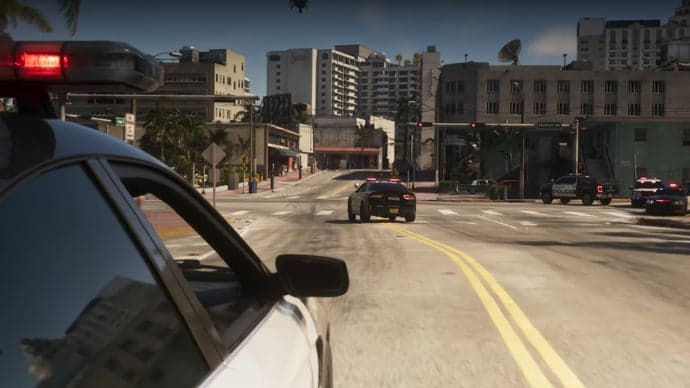
The latest wave of viral reactions traces back to community breakdowns of Rockstar's Netflix Extended Look footage and subsequent screenshot drops, where players zoomed into individual NPC faces on Leonida's streets and beaches. Threads across X and Reddit are filled with comments like "these can't be video game people" and side-by-side comparisons where users genuinely could not tell which frame was gameplay and which was a stock photo.
This isn't just marketing hype talking. The realism spike is measurable across several technical categories:
Skin and Subsurface Scattering: NPCs now show light penetration through skin, visible pore detail, and realistic sweat/oil sheen that reacts to Leonida's humidity and sun angle. Previous GTA titles used flatter diffuse shading that always read as "game skin." RAGE 9 closes that gap almost entirely.
Facial Animation Fidelity: Micro-expressions, asymmetric muscle movement, and believable eye saccades (the tiny involuntary eye movements humans make) are present in background characters, not just Jason and Lucia. That detail alone is why casual bystanders in trailer crowds are being mistaken for real actors composited into the scene.
Crowd AI and Behavior Variance: As covered in our breakdown of IO Interactive's developer reaction calling GTA 6 crowd AI "10 years ahead", NPCs no longer move in obvious loops. They react contextually, hold conversations with lip-sync accuracy, and display body language that matches emotional state, which reinforces the "these are real people" illusion when combined with the visual fidelity.
Environmental Photogrammetry: Vice City's foliage, concrete wear, and water refraction were built using techniques that mirror real-world scanning data, contributing to the same uncanny "photo not render" effect fans are calling out. Our Leonida Map & Biomes breakdown covers how Grassrivers and the Keys benefit from this same fidelity outside the city core.
Multiple viral clips specifically call out beach crowd scenes and nightclub sequences, both dense NPC environments where the realism claim gets tested hardest. When you throw dozens of unique-looking, independently animated humans into frame simultaneously and it still holds up, that's the signal something fundamentally changed in Rockstar's rendering pipeline.
Tactical Analysis
Here's why this matters beyond bragging rights on social media: visual fidelity at this level directly changes how you play GTA 6, not just how it looks in a trailer.
First, immersion-driven gameplay decisions. When NPCs read as genuinely human, players hesitate before committing violence, rob differently, and engage with the world's social systems (like the ones outlined in our Robbery & Heist Mechanics guide) with more caution. Rockstar knows this. Expect witness reaction systems and the 6-Star Wanted Level military response to lean harder into believable panic, meaning collateral damage during heists will generate faster, more organic escalation than GTA 5 ever produced.
Second, this level of facial and body fidelity is a direct signal about performance targets. Rendering this many high-fidelity, independently-animated humans per frame is computationally brutal. This ties directly into the ongoing 30 FPS console debate. Our coverage on GTA 6 being locked at 30 FPS on consoles, even PS5 Pro makes a lot more sense once you see how much GPU budget Rockstar is spending on individual NPC realism instead of frame rate headroom. If you're chasing 60 FPS, the PC release remains your best long-term bet, since desktop hardware can brute-force what consoles are sacrificing for visual density.
Third, consider the tactical PVE implications. Hyper-realistic crowd behavior means blending into a crowd during a wanted level evasion will actually work as a mechanic, not just an animation flourish. NPCs that behave like real bystanders will scatter, call it in, or freeze depending on context, which changes how you approach stealth routes through dense areas like downtown Vice City.
Finally, this realism wave feeds the broader narrative that GTA 6 isn't a generational graphics bump, it's a category shift. Combined with reporting like WaPo calling GTA 6 "the future" and the NYT's coverage on Rockstar's grand ambitions, the "these aren't real people" reaction isn't hyperbole, it's the expected response to a rendering pipeline built years ahead of anything else on the market. Players should prepare for a Leonida where every pedestrian encounter, every crowd scene, and every heist witness feels like a genuine variable rather than scripted set dressing.