

The Breakdown
The comment comes from a developer at IO Interactive, a studio with direct authority on the subject given Hitman's own reputation for sophisticated crowd simulation and social stealth AI. Unlike generic hype from outlets chasing clicks, this is a peer assessment from a competing studio that builds crowd systems for a living. That context matters. When a studio whose entire gameplay loop depends on believable NPC behavior says Rockstar's system is a full console generation ahead, it is not fanboy noise, it is a professional benchmark.
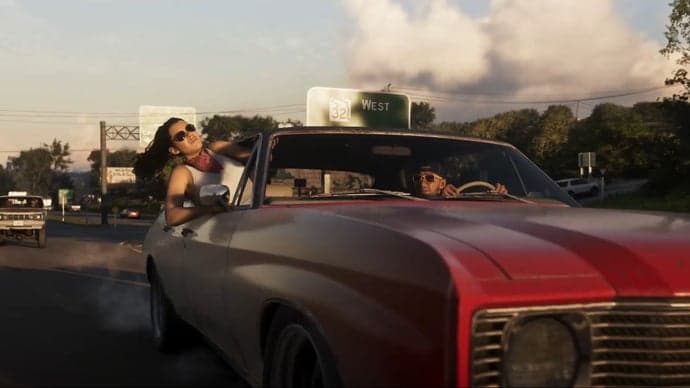
The specific praise reportedly targets how NPCs in the GTA 6 Netflix Extended Look react to environmental stimuli, combat proximity, and player behavior without falling into the repetitive scripted loops that have plagued open-world crowd systems since the PS3 era. Rockstar previously confirmed the game runs on the RAGE 9 engine, and much of the visual gameplay breakdown showed pedestrians ducking for cover mid-shootout, forming organic crowds around incidents, fleeing believably from vehicle collisions, and reacting differently based on location context, whether that's a dense Vice City street corner or a rural Grassrivers backroad.
This isn't the first time the extended look has drawn industry-wide scrutiny. Previous analysis pieces have already broken down how GTA 6's gameplay leap over GTA 5 extends far beyond graphical fidelity into simulation depth. The crowd AI claim adds a third-party, credentialed voice to that growing consensus, rather than relying purely on fan reaction or marketing copy.
Tactical Analysis
Here's why this matters beyond bragging rights. Crowd AI density directly impacts core gameplay systems players will actually use to make money and survive encounters in Leonida. If NPCs are genuinely reacting with 10-years-ahead sophistication, that changes the entire calculus of the GTA 6 6-Star Wanted Level System. Civilians won't just scatter randomly, they'll likely feed information to police AI, block vehicle escape routes unpredictably, or create chaotic congestion that both helps and hurts a fleeing player depending on positioning.
Think about heist getaways. The entire meta around GTA 6's Robbery and Heist Mechanics depends on how bystanders behave during a getaway sequence. A crowd system this advanced means players can no longer treat pedestrians as disposable set dressing. Using civilians as human shields, cover, or distraction tools becomes a legitimate tactical layer, but so does the risk of NPCs actively working against you, flagging your location to responding units, or panicking in ways that block critical chokepoints on Vice Beach or the Downtown grid.
This also reshapes how players should approach the RAGE 9 Vehicle Physics system. If pedestrian reaction AI is tied into traffic density and crowd behavior in real time, that means high-speed chases through populated zones will generate emergent chaos that's never scripted the same way twice. Combined with confirmed Blinkers and Traffic AI signal reactions, this points to an entire simulation layer where every system, pedestrian, vehicle, and law enforcement, talks to each other dynamically rather than operating in isolated scripted bubbles.
There's also an economic angle worth flagging. Advanced crowd AI at this scale is computationally expensive, which feeds directly into the ongoing debate around the GTA 6 60FPS mode uncertainty and whether even the PS5 Pro can sustain 60 frames while running this level of simulation density. Reports claiming GTA 6 may be locked at 30 FPS on consoles suddenly make a lot more sense when you consider the CPU overhead required to simulate hundreds of individually reactive NPCs across a map the size of Leonida. Players hoping for a smooth 60 FPS experience should temper expectations: this is the tradeoff for a crowd system that an outside AAA studio is calling a decade ahead of the curve.
For competitive-minded players prepping for launch, the tactical takeaway is simple: stop thinking of NPCs as background noise. Scout your escape routes with pedestrian density in mind. Treat crowded areas as unpredictable variables in any heist or wanted-level scenario, not guaranteed cover. Rockstar's ambition here, backed by outside developer testimony, suggests Leonida's population will behave less like a video game crowd and more like an actual functioning society reacting to your every move.