

The Breakdown
Miami-area officials have been steadily courting Rockstar's GTA 6 marketing footprint over the past year, and the money has followed. We've already tracked the Miami Beach multi-million dollar deal getting council approval, the $3M marketing rights payout, and GTA 6 signage spotted at a major downtown Miami venue. This isn't a rumor mill situation. Real contracts, real council votes, real ad placements.
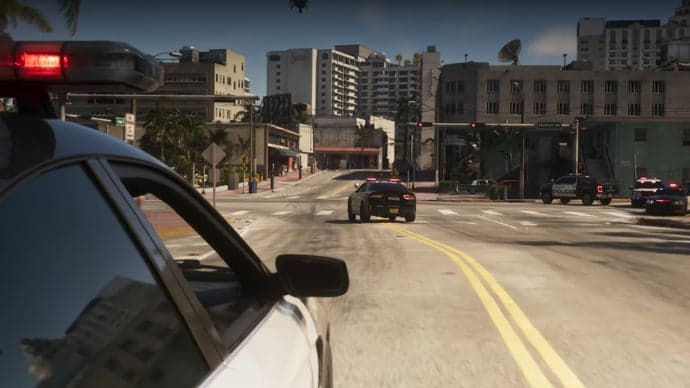
But not everyone in South Florida city government is on board. Per Mashable's reporting, law enforcement voices are now publicly objecting to the optics of officially branding Miami as the real-world Vice City. The concern isn't subtle: a franchise built on car theft, cartel violence, and cop-killing gameplay loops getting an official tourism and marketing tie-in from the actual city police patrol every day creates a PR headache that outlasts any launch week hype cycle.
This tension isn't new. We covered it when Governor Ron DeSantis warned that Miami isn't really Vice City, and again when a nudist resort got caught in review-bomb crossfire over fictional GTA 6 leak rumors. Add in the broader culture war noise the right can't seem to land a hit on, and you've got a pattern: local politics keeps colliding with Rockstar's marketing machine, and each collision generates its own news cycle independent of the actual game.
The police pushback specifically centers on messaging control. Officials who approved marketing deals want the tourism dollars and cultural relevance of being "the real Vice City." Police leadership wants no part of amplifying a game where cop cars get jacked and officers get gunned down for entertainment, especially not with municipal fingerprints on the promotional campaign. It's the same tension explored in our breakdown of the kind message debate around the Miami shoot approval, just escalated to a law enforcement union level instead of a city council chamber.
Tactical Analysis
Here's the part most outlets are missing: this friction actually validates how accurately Rockstar nailed the Vice City concept for RAGE 9. You don't get police unions publicly nervous about a marketing tie-in unless the game's simulation of Miami-style crime, corruption, and chaos feels uncomfortably real. That's a tactical signal for players expecting deep systemic AI behavior from law enforcement NPCs at launch.
Rockstar has historically leaned into exactly this kind of controversy rather than avoid it. Back in the original Vice City era, Miami-adjacent backlash over crime glorification did nothing to slow sales, it amplified them. Expect the same playbook here. Every police objection, every city council debate about signage placement, every DeSantis soundbite functions as free marketing that keeps GTA 6 in local news cycles well outside the gaming press bubble. Rockstar doesn't need to buy that attention. It's happening organically because the fictional-vs-real Miami debate is genuinely unresolved in the public's mind.
For players, the practical takeaway is about immersion fidelity. If police departments are worried about the game's portrayal reflecting badly on real Miami-Dade law enforcement, that's a strong signal the RAGE 9 engine's police AI, pursuit escalation, and wanted-level systems are built to feel authentic rather than arcade-y. Past leaks and gameplay context already point toward smarter cop AI that adapts to player behavior instead of just spawning more cruisers. If the portrayal is realistic enough to spook actual police unions, expect wanted-level tactics in-game to punish sloppy heist getaways harder than GTA 5 ever did.
There's also an economic angle worth tracking. Municipal tension over marketing deals could affect where and how aggressively Rockstar promotes location-specific content post-launch, including DLC tie-ins, in-game landmarks modeled on real Miami venues, or promotional events. If police and city officials keep clashing publicly, expect Rockstar to quietly de-emphasize direct "this is Miami" messaging in official marketing while leaning harder into the fictional Vice City brand identity, similar to how the original game handled it decades ago.
Bottom line: don't read this as bad news for the game. Read it as confirmation that the simulation is landing close enough to reality that real institutions feel compelled to respond. That's exactly the kind of friction that makes a GTA map feel alive instead of like a theme park.