

The Breakdown
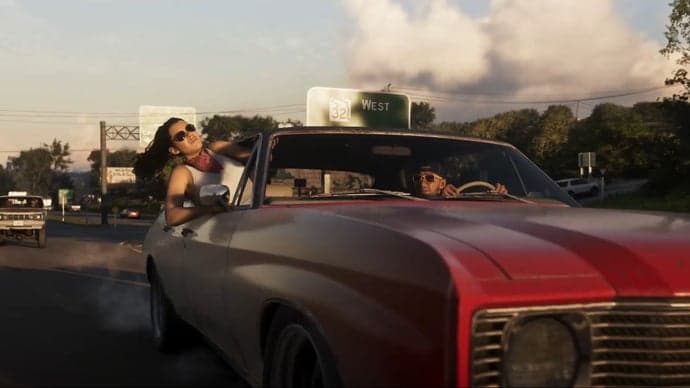
Recent hands-on impressions from outlets covering Rockstar's latest showcase, including a detailed writeup from gamereactor.eu, confirm what tactical analysts have suspected since the second trailer dropped: RAGE 9's vehicle physics are not a simple evolution of GTA V's arcade model. They're a deliberate synthesis.
GTA IV, built on the original RAGE and Euphoria engine combo, made cars feel like they had actual mass. Body roll during hard cornering, suspension compression on landings, and momentum carrying through drifts made every vehicle feel like a physical object obeying physics rather than a scripted asset. The tradeoff was control. Sedans understeered like boats, and precision driving during pursuits required real skill and patience.
GTA V swung hard in the opposite direction. Handling got snappier, drift correction became near-instant, and cars stuck to the road with grip levels that favored fun over realism. It made high-speed chases and stunt jumps more accessible but stripped away the tactile weight that made GTA IV's driving feel consequential.
GTA 6 reportedly threads the needle. Early impressions describe cars that still carry visible weight transfer under braking and cornering, similar to GTA IV, but with steering response and grip tuned closer to GTA V's arcade sensibility. Suspension travel, tire deformation, and terrain-based traction (mud, sand, wet asphalt) are all reportedly modeled dynamically rather than through static handling flags. This lines up with what we already know about GTA 6's gunfight overhaul, where Rockstar has consistently prioritized systemic realism over scripted arcade shortcuts this generation.
Vehicle classes also reportedly behave more distinctly from one another. Muscle cars carry momentum through corners and require throttle management. Compact cars turn tighter but lose stability at high speed. Off-road vehicles and the newly confirmed drivable trains reportedly interact with terrain physics in ways GTA V's binary "on-road/off-road" grip system never attempted.
Tactical Analysis
This hybrid model is a bigger deal than casual coverage is giving it credit for, and here's why every serious Leonida operator needs to internalize it before launch.
First, getaway strategy changes fundamentally. In GTA V, you could brute-force most chases by mashing the accelerator and relying on generous grip physics to bail you out of bad angles. If GTA 6 restores IV-style weight transfer, sloppy driving during a five-star heist escape will get you wrecked against a Vice Beach guardrail. Players need to relearn braking points, especially through the tight urban grid of downtown Vice City versus the open sweeping roads of the Ambrosia countryside. Practice runs on your actual heist escape routes are no longer optional. They're mandatory.
Second, vehicle choice becomes a genuine strategic decision again, not just a cosmetic one. If muscle cars carry real momentum and require throttle discipline while compact cars offer tighter but twitchier handling, your getaway vehicle selection needs to match the terrain of your job. A bank job finale routed through downtown alleys favors something nimble. A rural drug run across open highway favors something with straight-line stability. This is a return to GTA IV's philosophy where vehicle physics informed mission planning, not just aesthetics.
Third, this impacts PvP dramatically if Online modes inherit the same physics core. GTA V Online's driving skill ceiling was largely about exploiting forgiving grip and boost mechanics. A heavier, more weight-sensitive model raises the skill ceiling for actual car control: drifting, weight-shifting through chicanes, and managing traction on Leonida's varied surfaces (wet coastal roads, swamp mud in the Everglades-inspired zones, sand near the coast). Expect a meta shakeup where players who master weight transfer will dominate competitive races and PvP chases.
Fourth, and this is critical, law enforcement AI likely scales with this new physics baseline. If cop cars in pursuit also obey weighted physics, ramming tactics and PIT maneuvers become more viable and more punishing depending on execution. Sloppy ramming that worked in GTA V's arcade model could now spin your own vehicle out. Combined with the reworked combat systems detailed in our gunfight mechanics breakdown, it's clear Rockstar wants every escape, whether on foot or behind the wheel, to demand actual skill investment rather than muscle memory from a decade-old arcade model.
Finally, don't sleep on terrain-based traction for exploration and side content. If mud, sand, and wet surfaces genuinely affect grip, off-roading through the swamps or navigating storm weather (previously confirmed as a dynamic system in Leonida) becomes a legitimate hazard rather than a visual gimmick. Players farming money routes or navigating to remote heist setups will need to factor weather and terrain into route planning, similar to how the economy meta already demands route efficiency for time-sensitive runs.
Bottom line: treat GTA 6's driving model as a skill system, not a convenience feature. The players who invest time in a private lobby or early access window learning weight transfer, braking distances, and vehicle class behavior will have a massive tactical edge in both story missions and Online chases at launch.