

The Breakdown
Engadget's latest breakdown puts GTA 6's spending in a category by itself. For context, Cyberpunk 2077 reportedly cost CD Projekt Red around $450 million across development and marketing. Call of Duty: Modern Warfare 2 (2022) is estimated at roughly $640 million when you factor in Activision's marketing blitz. Star Citizen has burned through more than $700 million in crowdfunded development over a decade, and it's still not fully released. Red Dead Redemption 2, Rockstar's own previous benchmark, cost an estimated $540 million.
GTA 6 reportedly clears all of them combined, or close to it, depending on which analyst estimate you trust. Take-Two has never given an official number, but industry analysts tracking Rockstar's studio headcount, the multi-year Vice City production cycle, mocap expansion, and the marketing rollout (Trailer 1, Trailer 2, the Netflix Extended Look event) all point to a budget somewhere between $1 billion and $2 billion, with some estimates pushing past that when you include the years of delayed opportunity cost and repeated marketing pushes tied to the GTA 6 release date shifts.
This isn't just marketing spend inflation. Rockstar has kept a reported 2,000+ person development team working across multiple studios (Rockstar North, Rockstar San Diego, Rockstar India, Rockstar New England, and more) for the better part of a decade. That's an unprecedented sustained headcount for a single title, and it's the primary driver behind budget figures this staggering.
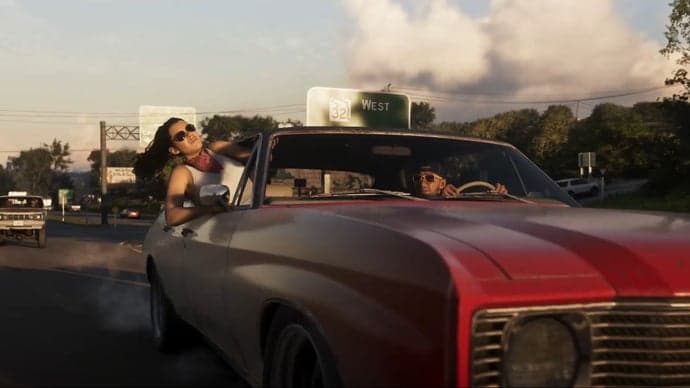
The spending isn't hypothetical either. We've already seen the receipts in the GTA 6 Netflix Extended Look, where the Leonida map and biome variety showed off Everglades-style Grassrivers, dense Vice City urban sprawl, and Keys-style island chains, all rendered with the kind of environmental fidelity that simply costs more money to build and iterate on than anything the industry has attempted before.
Tactical Analysis
Here's what this budget actually buys players, and why it matters more than the headline number itself.
Simulation depth costs real money. The confirmed RPG mechanics like eating and exercise aren't cheap features to bolt on. Building interconnected systems where hunger, fitness, and appearance actually affect gameplay outcomes requires engineers, animators, and QA teams testing edge cases for years. Same goes for the physical appearance changes and relationship system. These aren't marketing bullet points, they're expensive, interlocking simulation layers that only a budget this size can sustain through multiple production cycles without getting cut.
RAGE 9 physics is where the money is most visible. The soft-body vehicle deformation and crash telemetry we've seen requires custom engine work that most studios can't afford to build from scratch. Rockstar has been iterating on RAGE for over a decade specifically because a proprietary engine this deep needs a AAA-plus budget to keep evolving. Compare that to studios leaning on Unreal Engine 5 out of the box: they're saving money on engine development but sacrificing the kind of bespoke physics fidelity Rockstar is chasing.
Map density is a direct budget output. The confirmed biome variety across Leonida, from swamps to city blocks to coastal keys, isn't just art direction. Every biome needs unique enemy AI behavior, unique loot tables, unique traffic patterns, and unique mission scripting. A smaller budget forces developers to reuse assets and compress biome variety. GTA 6's spending means less compromise, and it's why the community mapping projects like the CyberLeek-matched Leonida map show a world with far more granular zone diversity than GTA 5 ever had.
Heist and economy systems benefit directly. The dual switching and safe hacking mechanics confirmed in recent breakdowns require full mission-branch scripting for every heist variant. That's expensive content to build and balance, but it's exactly the kind of replayability infrastructure that keeps single-player engagement high and sets up GTA Online's eventual economy meta. Players should expect the money-making loop at launch to be deeper and more varied than GTA 5's Online grind ever was in its first year, purely because Rockstar had the budget to build more heist branches upfront instead of patching them in later.
What this means for launch expectations. A budget this size raises the ceiling but also raises the stakes. Rockstar can't afford a buggy, thin launch after spending this much and delaying this long. Expect an unusually aggressive day-one patch cadence and a marketing machine that won't slow down, similar to what we saw around the Netflix Extended Look rollout. Budget this large also all but guarantees continued post-launch investment, meaning GTA Online's eventual VI successor will likely receive years of well-funded content drops rather than the slow-burn support some competitors offer.
For players prepping strategy now, the takeaway is simple: this budget bought systemic depth, not just graphical polish. Expect economy loops, wanted system escalation (see the confirmed 6-star military response tactics), and biome-specific strategy to matter far more than in previous entries. Plan your playstyle around exploiting that depth rather than expecting a reskinned GTA 5 loop.